Blog
Guides and workflows for concept artists, illustrators, and visual creators.
Your First Catalyze Session: From Five Reference Images to a New Creative Direction
A step-by-step walkthrough of your first Catalyze session in Ktlyst: gather five reference images, run Catalyze, and turn the results into a fresh creative direction.
Are Reference Boards Obsolete? Why the Next Generation of Tools Moves From Collecting to Creating
Collecting references is a solved problem. Learn why the real bottleneck comes after, and how Ktlyst's Catalyze turns your reference board into new creative directions.
Beyond PureRef and BeeRef: How AI-Powered Catalyze Changes Reference Image Management
PureRef and BeeRef are great at laying out reference boards, but neither organizes them as your library grows. Here's how Ktlyst's AI-powered Catalyze feature picks up where they stop.
Ktlyst vs Storyflow: Which AI Ideation Canvas Fits Concept Artists?
Ktlyst and Storyflow both put AI on an infinite canvas, but they're built for different jobs. Here's how they compare for concept artists choosing an ideation tool.
Looking for a vizref Alternative? Meet Catalyze for Reference Image Management
vizref is a simple way to lay out reference boards, but organizing them gets harder as your library grows. Here's how vizref, PureRef, and BeeRef compare, and where Ktlyst's Catalyze feature fits in.
Google Whisk AI Shut Down: The Best No-Prompt Alternatives for Concept Artists
Google retired Whisk AI on April 30, 2026. Here's what replaced it, and how concept artists who build from reference images (not prompts) can pick the right alternative.
Milanote vs FigJam vs Ktlyst: Which Mood Board Tool Actually Helps Concept Art Ideation?
Milanote and FigJam both organize visual ideas, but neither is built around reference images the way concept artists need. Here's how they compare to Ktlyst.
No-Prompt AI Art Generators in 2026: Whisk, Atomm AI, Freeform Diffusion, and Ktlyst Compared
Whisk, Atomm AI, Freeform Diffusion, and Ktlyst all skip the text prompt — but they work in very different ways. Here's how each one actually turns references into art.
Why Does AI Art Look Generic? The Real Reason (And How to Fix It)
AI art looks generic because most tools start from a text prompt, not a real reference. Here's the actual cause — and how to get a distinct, personal style back.
Ktlyst vs Ideogram Character: Reference Board or Single-Photo Prompting for Consistent Characters?
Ideogram Character locks one reference photo and lets you prompt new scenes. Ktlyst starts from a whole board of references — no prompt needed. Here's how the two actually differ.
How to Use AI for Concept Art Without Losing Your Own Style
Worried AI will flatten your art style? Here's how concept artists use reference-based AI ideation to explore new directions without losing their own voice.
PureRef vs BeeRef vs refern: Which Reference Board Should Concept Artists Actually Use in 2026?
PureRef, BeeRef, and refern compared for concept artists — free floating viewer vs. open-source overlay vs. tagged library — and where an AI-assisted canvas like Ktlyst fits in.
Best PureRef Alternative for iPad in 2026: A Reference Board Built for Tablet Artists
PureRef still has no native iPad app. Here's what to look for in a PureRef alternative for iPad and tablet, and how Ktlyst's cloud-synced reference board fits concept artists' workflow.
AI Mood Boards for Concept Artists: How to Lock In a Visual Style Without Writing a Prompt
Struggling to keep a consistent visual style across concept art? See how an AI mood board that reads your references can guide direction without a single text prompt.
AI Character Consistency Without LoRA: How to Keep the Same Character Across Every Scene
If your AI-generated character's face or outfit shifts between scenes, prompt tweaks and LoRA training aren't your only options. Here's how Ktlyst keeps character consistency using reference images instead.
IP-Adapter vs ControlNet: What's the Difference? (And How to Get Both Without Touching a Single Node)
IP-Adapter and ControlNet solve two different problems in AI image generation. Here's how they differ, and how Ktlyst lets you use the same ideas just by arranging reference images — no ComfyUI nodes required.
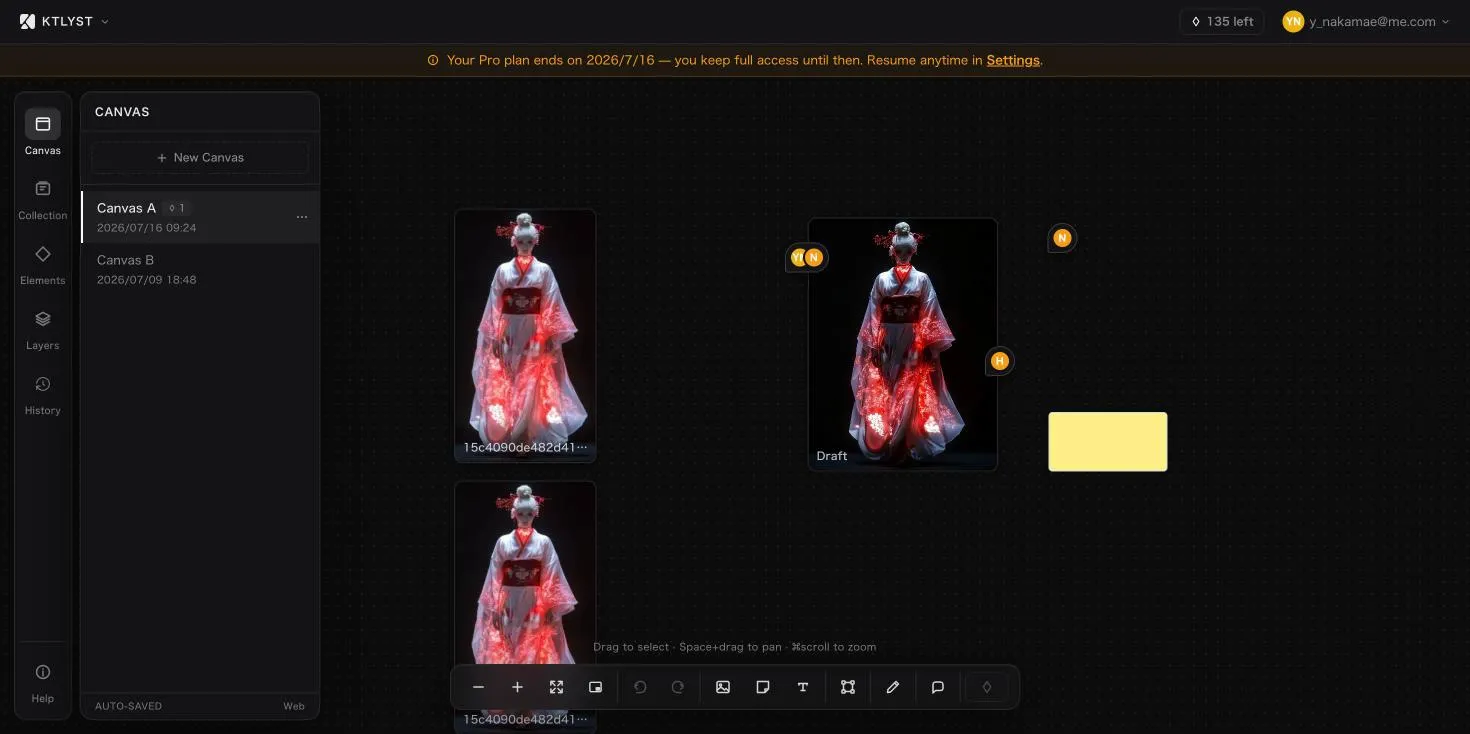
You Don't Need to Write Prompts. The Era of AI Image Generation by Just "Arranging Reference Images"
For those struggling with AI image generation prompts. We explain how Ktlyst lets you generate images simply by arranging reference images without writing text, and how it differs from Midjourney and ComfyUI.
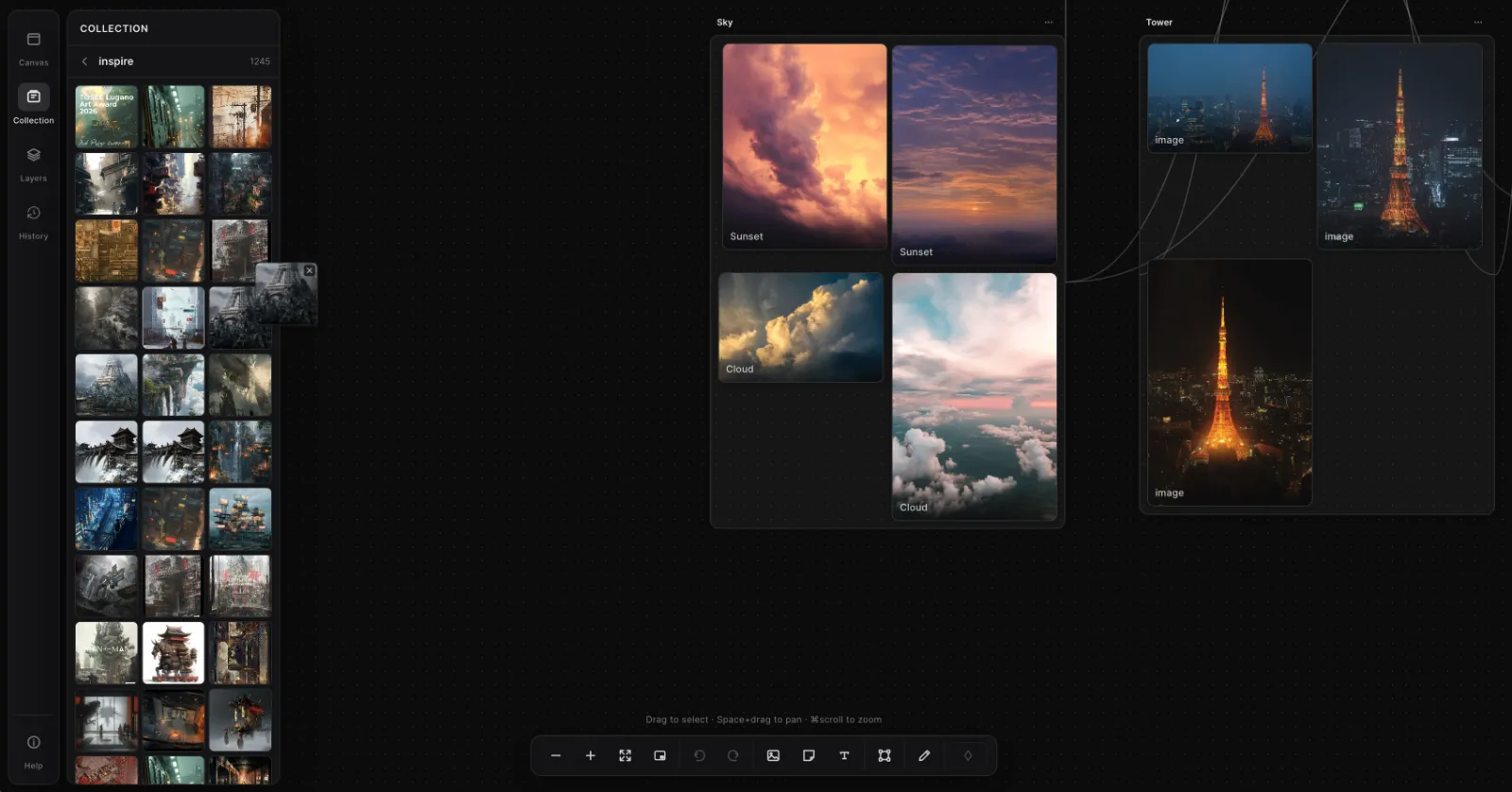
Ktlyst vs PureRef: An Honest Comparison for Artists (2026)
Discover the unique features that make Ktlyst the top choice over PureRef and other reference board apps.